
Emergency CareHealthcare AI

VitaLink

A triage and intake assistant designed for emergency departments, where every minute matters and operational clarity can change outcomes.

VitaLink Logo

Category

Healthcare Triage System

Environment

Emergency Department (UPU)

Stage

Prototype

Type

ML Assisted Intake Kiosk

The Context

VitaLink began with a practical question: what breaks first when an emergency department gets overloaded, and what can be stabilized with better intake infrastructure. The team started with customer discovery visits in emergency units, field interviews, and workflow observation in both public and private settings.

The findings were consistent. Waiting rooms fill quickly. Initial assessment can lag behind patient volume. Staff must make high pressure decisions while handling fragmented data entry and communication overhead. In that environment, delays are not just operational. They shape clinical risk.

VitaLink was framed as a system response to this bottleneck: faster intake, more reliable symptom capture, and clearer routing signals for medical teams, without replacing clinical judgment.

The custom application system behind the prototype was developed by Andrei Tanase and Valentina-Gabriela Corcodel, covering the full flow: patient-facing intake, consent and identity capture, triage logic integration, and handoff toward hospital-side operational systems.

For prioritization, Andrei built and trained a custom patient-sorting model using a specially prepared training dataset built from real patient data, structured and anonymized for machine learning. This model powers the prototype's red-yellow-green urgency assignment layer.

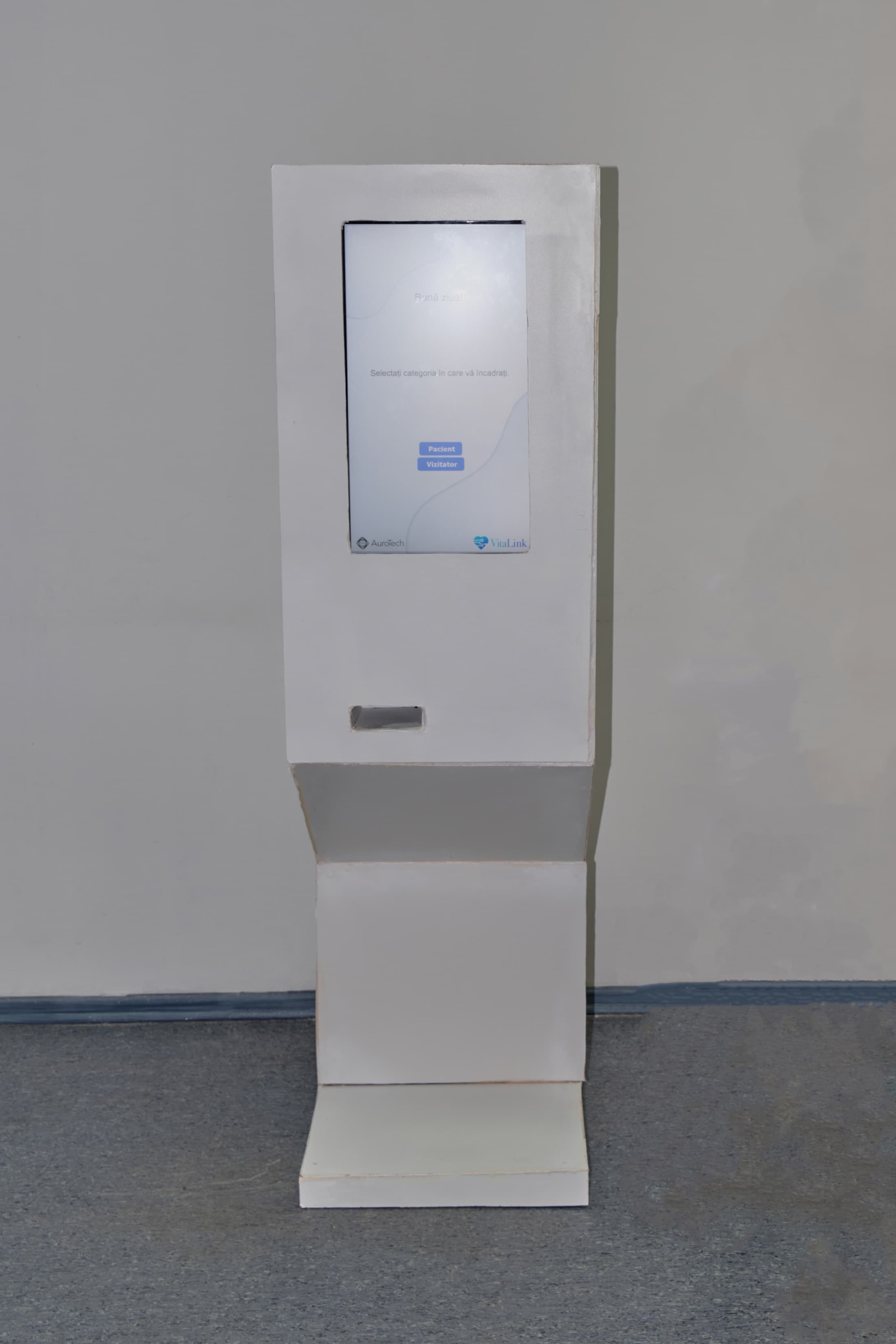
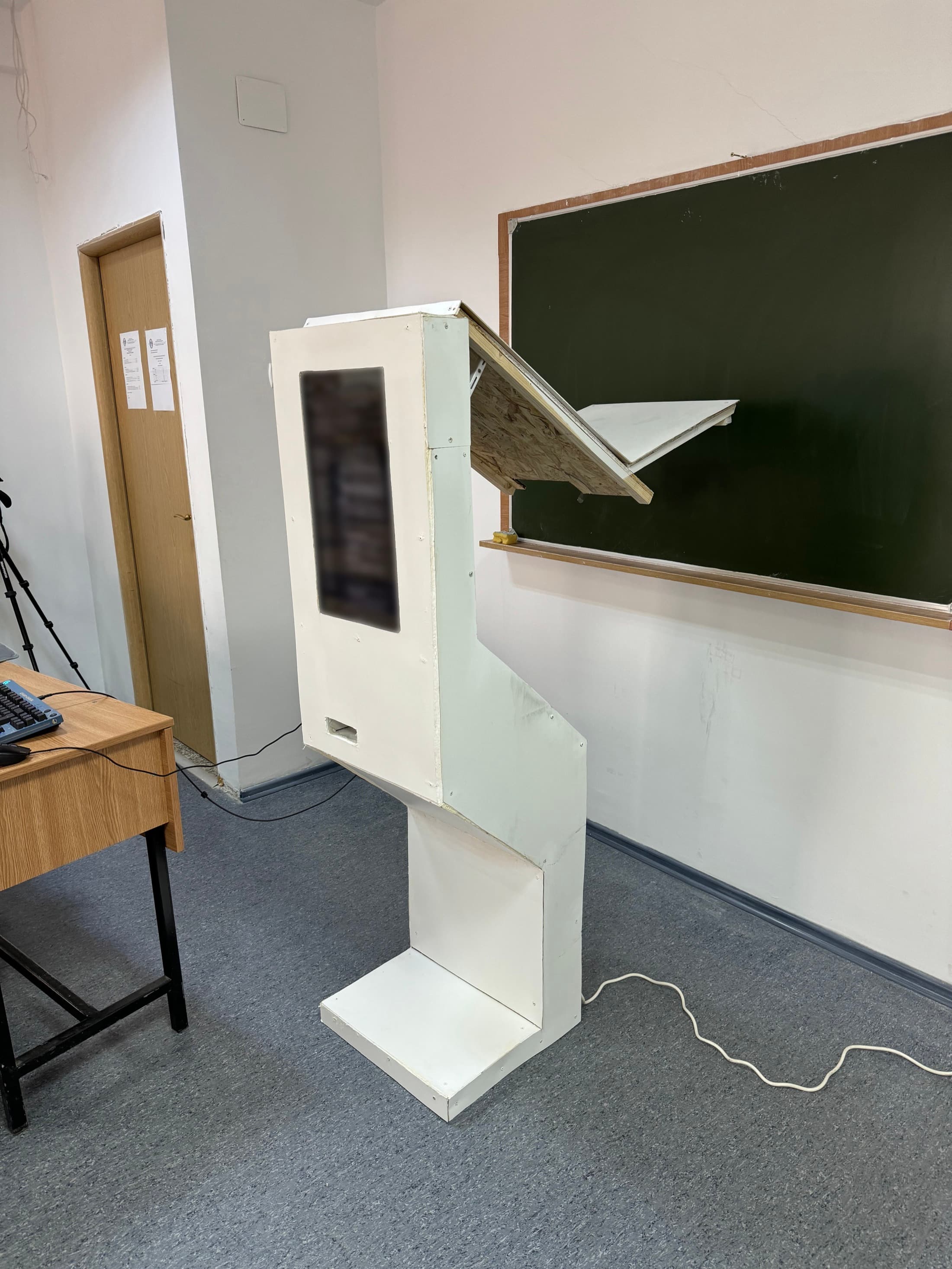
The physical unit is a real-life size prototype assembled with hand-machined components. We validated the live software directly on the device, including a narrated flow and voice control for hands-free operation in busy emergency spaces.

This is a prototype focused on triage speed, data quality, and decision support under real emergency constraints.
Physical Prototype

A full-scale assembled prototype with hand-machined components, shown both running its software flow and with the service door open for direct access to internal modules.

VitaLink full-size prototype running the software interface
Running state: the full-size prototype executing the working software flow.
VitaLink prototype with open service door exposing internal components
Open-door state: the unique body access door reveals internal prototype components.

What We Found

Waiting Time Pressure

Discovery work at emergency units highlighted long queues, slow initial evaluation, and treatment delays during peak hours.

Data Intake Friction

Manual registration and fragmented data handoff create avoidable delays before medical teams can triage and act.

Clinical Overload Risk

Overcrowded spaces, staffing limitations, and decision fatigue increase pressure on both nurses and physicians.

System Flow

Triage Sequence

1

Patient or visitor chooses the appropriate flow and reviews GDPR consent.

2

Identity is captured through document scan or manual identification input.

3

Symptoms and pain zones are entered through guided prompts.

4

Machine learning model calculates urgency and assigns triage color.

5

Encrypted record is transferred to the hospital system for nurse and doctor handoff.

Structured Triage Flow

VitaLink organizes intake in a guided sequence so patient data, symptom input, and urgency scoring happen in a clear operational order.

Machine Learning Severity Assignment

Andrei developed and trained a custom model that maps symptom patterns to color-coded urgency groups using a specially prepared dataset built from real patient records and anonymized for training.

OCR Powered Registration

ID scanning and OCR reduce manual typing and improve data accuracy at the point of entry.

Accessibility First Interaction

The interface is designed with a built-in narrator, voice control, and inclusive interaction choices for patients with different abilities.

Design and Product Principles

Intuitive, modern interface for high stress environments.

Ergonomic structure designed for frequent use in public hospital spaces.

Adapted interaction for users with disabilities.

Sterilizable hardware form with clear visual identification.

Interconnectivity with existing hospital information systems.

Market and Institutional Feedback

I can see a better future for the hospital with VitaLink.

- County Hospital Constanta

A brilliant idea. I am looking forward to seeing this implemented.

- Emergency Department Physician

This is a digital assistant designed for the exact pressure points of emergency intake.

- Private Hospital Feedback